


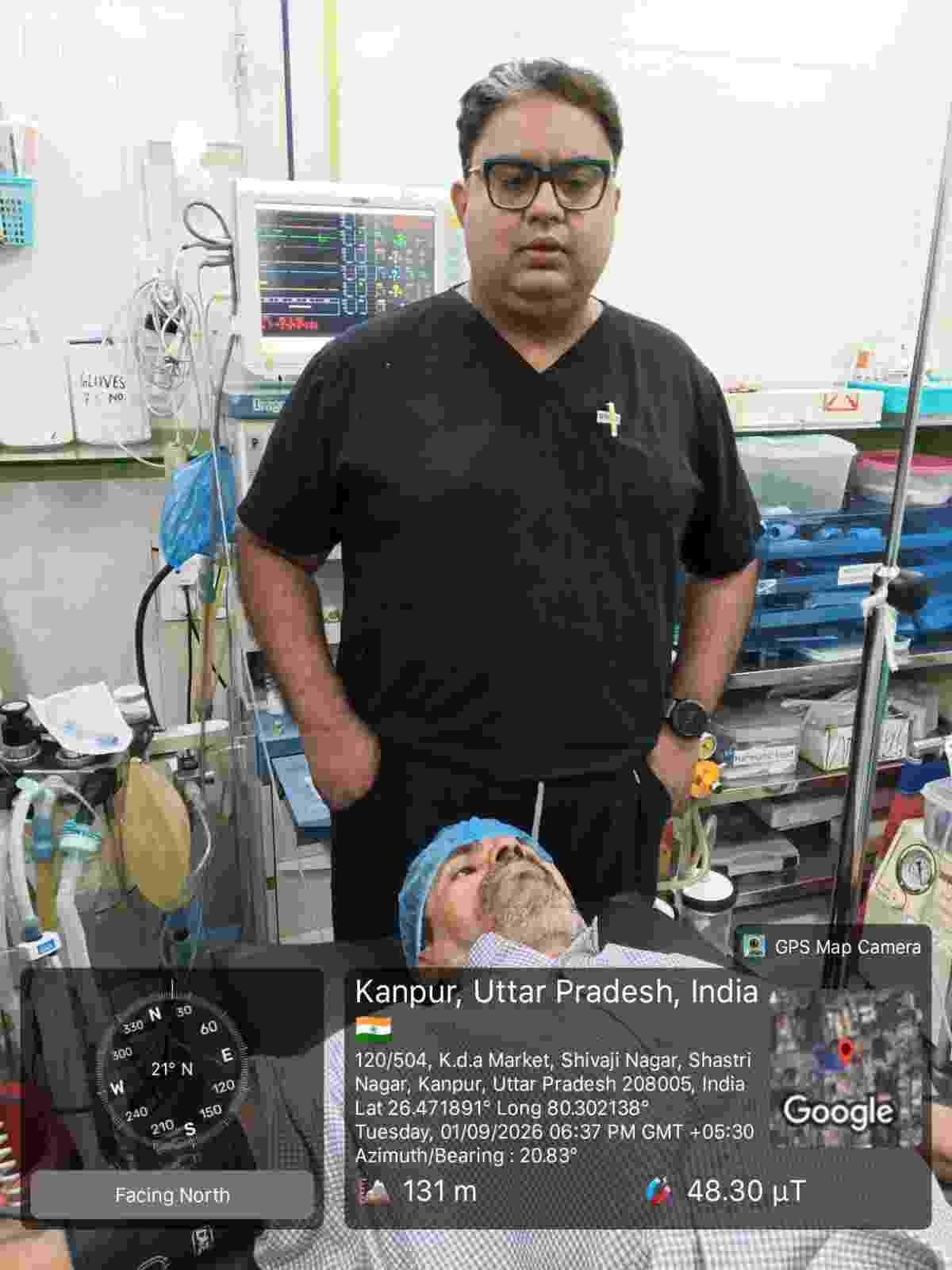
Dr. Shivanshu Misra on Obesity, PCOD and Infertility: What Is the Connection?
When a woman is unable to conceive, there can be many reasons behind it. Sometimes the problem is related to ovulation. Sometimes there are other fertility-related factors. And in some women, weight and PCOD are also part of the story.
Over the years, I have met many women who come with irregular periods, PCOD, weight gain and difficulty in getting pregnant. They often ask me the same question: “Doctor, can losing weight really help me conceive?”
The answer is not the same for every woman. But in women where obesity is affecting periods and ovulation, losing weight can make a real difference.
How are obesity and PCOD connected?
PCOD can affect a woman’s menstrual cycle and ovulation. Some women have periods that come after long gaps. Some may have very irregular cycles. In simple terms, the body may not release an egg regularly, which can make conception difficult.
Weight gain can add to this problem.
When someone is carrying excess weight, the body’s normal hormonal and metabolic processes can be affected. This can make problems with ovulation worse in some women who already have PCOD.
This is why I don’t look at PCOD and obesity as completely separate issues when a patient is also trying to conceive.
The first question is not always, “Which fertility treatment should we start?”
Sometimes the better question is, “What is happening with her weight, periods and ovulation?”
Can losing weight help a woman get pregnant?
For some women, yes.
When a woman with obesity loses weight, her periods may become more regular. Ovulation can improve as well. If irregular ovulation was one of the reasons she was having difficulty conceiving, this change can improve her chances of getting pregnant.
But I always make one thing clear to my patients: losing weight does not guarantee pregnancy.
Infertility can have several causes. The woman’s reproductive health needs to be evaluated properly, and the male partner’s fertility also needs to be considered.
So, I would never tell a woman that obesity is automatically the reason she is not conceiving.
It is one part of the picture that needs to be understood.
This is something I have also studied through my research
My interest in the connection between obesity, PCOD and female fertility is not limited to my clinical work.
I was a co-author of a research paper titled “Impact of Bariatric Surgery on Female Reproductive Health and Maternal Outcomes,” which was published in Obesity Surgery.
We studied 45 women who had undergone bariatric surgery. Most of them underwent sleeve gastrectomy, while some underwent gastric bypass and one patient underwent adjustable gastric banding.
Among the women who had primary infertility, 7 conceived after bariatric surgery. Three conceived naturally, while four conceived with assisted reproductive techniques.
We also found that PCOD-related menstrual symptoms improved after surgery.
The paper was accepted among the top 10 papers at the World Congress of Bariatric Surgery in Madrid, Spain.
For me, this was an important question to study because bariatric surgery is usually discussed in terms of weight loss. But patients want to know what happens to the rest of their health after they lose weight.
For a woman with obesity, PCOD and fertility problems, that question becomes even more important.
Is bariatric surgery a fertility treatment?
No.
I want to make this very clear because there can be confusion around this subject.
Bariatric surgery is a treatment for obesity. It is not a direct treatment for infertility.
However, when severe obesity is contributing to irregular periods, PCOD symptoms or problems with ovulation, substantial weight loss after bariatric surgery may improve those problems.
That may help some women conceive.
For another woman, there may be a completely different reason for infertility, and she may still need fertility treatment after losing weight.
Every patient needs to be assessed individually.
What about pregnancy after weight-loss surgery?
This is something women should discuss before undergoing surgery.
As weight comes down, fertility can improve. A woman who has had irregular periods for years may start having more regular cycles. Ovulation may return.
That means pregnancy can sometimes happen sooner than expected.
This is why pregnancy planning after bariatric surgery is important. Women also need proper nutritional follow-up after surgery because the body is going through major changes during the weight-loss period.
If a woman is planning a pregnancy after metabolic surgery, I would always recommend discussing the timing with her bariatric surgeon and obstetrician.
My work in bariatric and metabolic surgery
My work in this field has continued for many years.
I have been involved in more than 56 national and international peer-reviewed publications and have contributed as a co-author to eight books in metabolic surgery. My research has covered different aspects of bariatric surgery, including sleeve gastrectomy, gastric bypass, long-term outcomes and nutritional issues.
In 2022, I was recognised as the Best Young Bariatric Surgeon of India.
For me, academic work and surgery go together. When patients come to us, they have questions that are much bigger than weight loss.
They ask whether their diabetes can improve. Whether their periods can become regular. Whether they can conceive. Whether they can have a healthier pregnancy.
These are the questions that matter to a patient sitting in front of us.
If you have PCOD, obesity and infertility
If you are dealing with PCOD, obesity and infertility, don’t assume that you have to immediately move towards fertility treatment without looking at the rest of your health.
Start with a proper assessment.
Look at your periods. Understand whether you are ovulating. Check your weight and metabolic health. Evaluate other possible causes of infertility.
For some women, lifestyle changes may be enough.
For others with severe obesity, medicines or metabolic surgery may be considered.
And sometimes fertility treatment will still be required.
There is no single solution for every woman.
What I tell my patients
When a woman tells me, “Doctor, I want to become a mother,” my first thought is not simply about surgery.
I want to understand her story.
How long has she been trying? Are her periods regular? Does she have PCOD? Has she gained significant weight? Is she ovulating? Has she already undergone fertility treatment?
Once we understand these things, we can decide what needs to be addressed.
My research into bariatric surgery, PCOD, infertility and maternal health has given me an opportunity to study this connection closely. What we know is that significant weight loss can improve menstrual problems and ovulation in some women with obesity and PCOD. It can improve the chances of conception for some patients, but it cannot promise pregnancy.
That is the message I want women to understand.
Treating obesity may be one part of treating the fertility problem when weight is contributing to it.
The aim is to help the woman become healthier first, and then make the right decisions about conception and pregnancy based on her individual situation.
This article is intended for general awareness and does not replace individual consultation with a bariatric surgeon, gynaecologist or fertility specialist.
For more info visit : https://drshivanshumisra.com/
By Dr. Shivanshu Misra
