


Every day in India, millions of phones, appliances, cables, chargers, and packaging materials quietly move from households into the waste stream. For most people, once something stops working or loses its usefulness, it simply becomes waste.
A phone with a cracked screen is pushed into a drawer or discarded. An appliance that stops working is replaced with a newer model. Plastic packaging is thrown away minutes after a product is opened.
Yet what many people do not realize is that much of this “waste” still contains valuable materials.
Inside a discarded smartphone are copper, aluminum, gold, cobalt, and rare earth elements. Broken appliances contain motors, wiring, and circuit boards that still hold recoverable metals. Even textiles and packaging materials often have recycling or reuse potential.
The challenge is therefore not simply waste generation — it is the loss of valuable resources.
This is where the concept of the circular economy becomes important. Instead of treating products as disposable, circular systems aim to keep materials in use for as long as possible through repair, reuse, refurbishment, and responsible recycling.
While circular economy discussions often focus on government policies or industrial innovation, the reality is that the system begins much closer to home — in the everyday decisions made by citizens.
India’s Growing Waste Challenge
India’s economy and consumption patterns have changed rapidly over the past two decades. Urbanization, rising incomes, and increased access to technology have transformed how people buy, use, and replace products.
Electronic devices, home appliances, and packaged goods are now part of everyday life across millions of households.
However, this rapid growth has also created a significant waste management challenge.
India generates approximately 62 million tonnes of municipal solid waste every year, and the volume continues to grow as consumption increases.
Electronic waste has become a particularly pressing concern. India currently produces around 1.6 million tonnes of e-waste annually, making it one of the largest e-waste generators in the world.
Yet only 22–25 percent of this waste enters formal recycling systems.
A large portion of discarded electronics flows through informal channels or ends up in landfills where valuable materials are permanently lost.
At the same time, industries continue importing critical minerals and raw materials needed for manufacturing — including metals that already exist inside discarded electronics.
This creates a paradox: valuable materials are discarded while the same resources are mined or imported again.
A circular economy addresses this challenge by designing systems that keep materials circulating within the economy rather than being lost as waste.
But these systems do not begin in recycling plants.
They begin in homes.
The Invisible Workforce Behind Circular India
An important part of India’s circular economy already exists — though it often remains invisible.
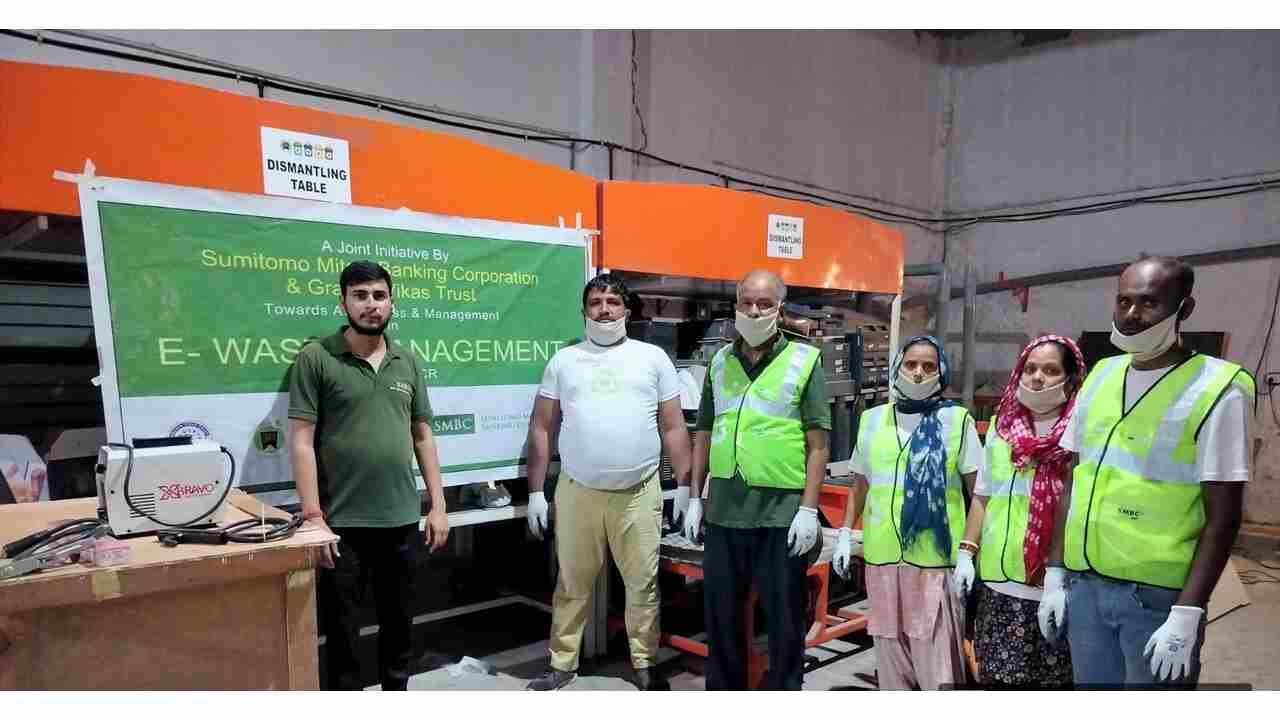
Across cities and towns, thousands of waste pickers, scrap collectors, and informal recyclers recover materials from discarded products every day. These workers play a crucial role in diverting plastics, metals, and electronics away from landfills.
India’s informal recycling networks have historically enabled significant material recovery at the grassroots level. However, most waste workers operate without formal recognition, adequate infrastructure, or safe working conditions.
Strengthening India’s circular economy therefore requires integrating informal recycling networks with formal waste management systems, improving safety standards, and creating better economic opportunities for waste workers.
When supported effectively, these workers become one of the strongest pillars of a circular resource economy.
Repair: A Missing Pillar of the Circular Economy
Another important pillar of the circular economy is repair.
In many cases, products are discarded not because they cannot be repaired, but because repair services are difficult to access, spare parts are unavailable, or consumers perceive replacement as easier.
Yet repair plays a major role in reducing environmental impact.
Extending the life of a smartphone by even one year can significantly reduce the carbon emissions associated with manufacturing a new device. Repairing appliances or electronics also prevents valuable materials from entering waste streams prematurely.
Repair ecosystems also create local skilled employment, from technicians and electronics specialists to neighborhood repair shops.
Recognizing the importance of repair, the Government of India has launched the Right to Repair initiative, encouraging manufacturers to provide access to spare parts, repair manuals, and diagnostic tools.
Repair is not merely a technical activity — it is a key component of sustainable resource management.
Policy Support for Circular Economy
India’s policy landscape is gradually evolving to support circular systems.
One important development is the E-Waste Management Rules 2022, which aim to strengthen the collection and recycling of electronic waste.
A major component of these rules is Extended Producer Responsibility (EPR). Under EPR frameworks, manufacturers are responsible for ensuring that their products are collected and recycled responsibly at the end of their lifecycle.
These regulations encourage companies to design products that are easier to recycle while also supporting the development of responsible recycling infrastructure.
Together with initiatives such as the Right to Repair, these policies signal an important shift toward more sustainable product lifecycles.
Technology Enabling Citizen Participation
Digital technology is also beginning to reshape how citizens participate in circular systems.
Mobile platforms and digital tools can connect households with recycling networks, track sustainable actions, and reward responsible behavior.
One example is KarmaCoin, which aims to incentivize environmentally responsible actions.
Through such platforms, individuals can receive recognition or rewards for activities such as:
- segregating waste
• participating in recycling programs
• supporting sustainable consumption practices
• engaging in community sustainability initiatives
By making environmental contributions visible and measurable, digital systems can encourage long-term behavioral change and help scale citizen participation in circular economy initiatives.
The 4R Vision: Reduce, Reuse, Repair, Recycle
Many circular economy initiatives are guided by the 4R framework.
Reduce focuses on minimizing unnecessary consumption and waste generation.
Reuse encourages extending the life of products and materials wherever possible.
Repair promotes fixing items instead of discarding them prematurely.
Recycle ensures materials are responsibly processed so they can re-enter manufacturing cycles.
Organizations working in sustainable waste management — including 3RZeroWaste and the broader 3RZW Environment Foundation — focus on strengthening these principles through waste recovery systems, community awareness programs, and technology-enabled participation.
These efforts have also received national recognition. 3RZeroWaste was the winner of the 2025 CII 4R Awards for Social Innovation, presented by the Confederation of Indian Industry.
As of today, the organization has received 38 awards and recognitions, reflecting growing acknowledgement of its contributions to responsible waste management, resource recovery systems, and community-driven sustainability initiatives.
By promoting the 4R philosophy and building systems that support responsible recycling and resource recovery, such initiatives aim to move society closer to a circular model of resource use.
A Collective Path Forward
The circular economy is often discussed as an industrial transformation or a policy framework.
In reality, it begins with something far simpler: the everyday decisions made in homes, repair shops, recycling networks, and communities across the country.
Every household that segregates waste properly, every technician who repairs a device, every recycler who recovers valuable materials, and every individual who participates in sustainability initiatives contributes to a broader transformation.
When millions of these actions come together, they create the momentum needed to build a more resource-efficient future.
India’s circular future will therefore not only be built in factories and policy offices.
It will also be built in households.
Because sustainability may begin with individual action — but it succeeds through collective participation.
